Updated October 2026
Best Kids' Shoes for Flat Feet
First, the reassuring part: most young children have flat-looking feet, and most grow out of it. But if your child's feet ache, tire quickly, or the shoes wear unevenly, a well-made shoe with a stable heel can make everyday play more comfortable.
This page contains Amazon affiliate links. If you buy through them, I may earn a commission at no extra cost to you. See the
affiliate disclosure.
Quick picks
Two proven, widely available kids' shoes with stable heels and supportive builds. Bring any concerns to a pediatrician first.
How these picks were chosen
These are research-based picks, not a claim that I've worn every pair on this page. I compared manufacturer specifications against the features that matter most for flat feet — heel-counter firmness, midsole stability, a removable insole for orthotics, and wide-size availability — and read through patterns in verified buyer feedback. See
how I evaluate shoes and the
medical disclaimer.
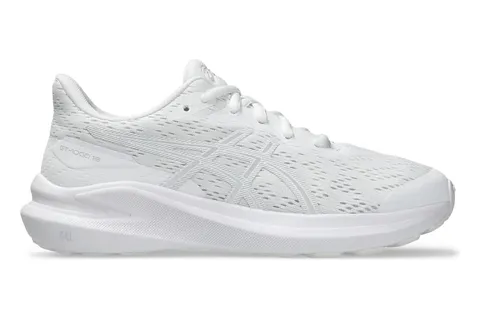
The GT-1000 is ASICS' long-running stability trainer, and this is the grade-school version, one of the few kids' shoes built on a stability platform rather than just scaled down. Rearfoot GEL cushioning helps with impact, and the mesh upper holds the foot securely.
Why it suits flat feet
- Kids' edition of an adult stability shoe
- Rearfoot GEL for impact absorption
- Supportive mesh upper
- Lace-up for a secure, adjustable fit
Drawbacks
- Laces can be a hassle for younger kids
- Grade-school sizes only
- Pricier than basic kids' sneakers
Who should buy it
Older kids with flat feet who are active in running sports.
Who should skip it
Young children who can't tie laces yet.
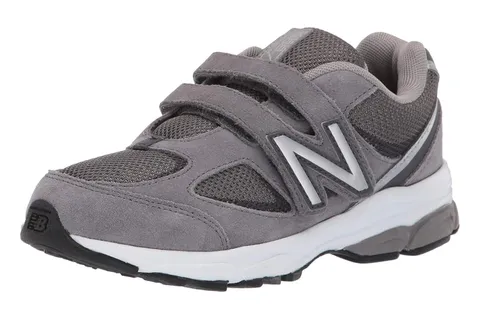
The 888 is a parent favorite with thousands of ratings, and it's a smart pick for flat feet because it's sturdy: an ABZORB midsole that combines cushioning with compression resistance, a durable rubber outsole, and a suede-and-mesh upper. Hook-and-loop straps mean a snug fit even when kids put the shoes on themselves.
Why it suits flat feet
- ABZORB midsole resists packing down
- Durable suede-and-mesh upper
- Hook-and-loop closure kids can manage
- Huge base of positive parent feedback
Drawbacks
- Not a dedicated stability shoe
- Suede gets scuffed on the playground
Who should buy it
Most kids with flexible flat feet who need an everyday school and play shoe.
Who should skip it
Kids with a diagnosed condition who need an orthotic-specific shoe; follow your clinician's advice.
Is my child's flat foot normal?
Most toddlers look flat-footed because of a fat pad under the arch and loose ligaments, and arches typically develop through early childhood. The common pattern is a flexible flat foot: the arch disappears when standing but appears when your child stands on tiptoe or sits with their feet hanging. That's usually not a concern.
See a pediatrician or podiatrist if:
your child has pain in the feet, ankles, or legs; the foot looks flat even on tiptoe (a rigid flat foot); only one foot is affected; they tire much faster than other kids; or they limp. Our
flat feet in children guide explains these signs in more detail.
What to look for in a kids' shoe
- A firm heel counter that doesn't collapse when you squeeze it.
- Flex at the toes, not the middle. Bend the shoe: it should bend where the toes bend, not fold in the arch.
- A secure closure. Laces or hook-and-loop straps keep the heel seated. Avoid floppy slip-ons for everyday wear.
- Room to grow, but not too much. About a thumb's width past the longest toe. Too much room makes a child grip with their toes.
- Replace them often. Kids outgrow shoes every few months, and hand-me-downs carry the previous child's wear pattern.
Frequently asked questions
At what age do children develop arches?
Arches usually develop gradually through early childhood, with many children showing a visible arch by around age 6. Some people keep flexible flat feet into adulthood with no problems at all.
Do kids with flat feet need orthotics?
Most children with flexible, painless flat feet don't need orthotics. If your child has pain, a rigid flat foot, or other concerns, a pediatrician or pediatric podiatrist can tell you whether orthotics or other treatment would help.
Should kids go barefoot if they have flat feet?
For healthy kids, barefoot play on safe, natural surfaces is generally encouraged for foot development. Supportive shoes matter more for long days on hard surfaces, school, and sports. Ask your pediatrician if your child has pain.