Updated October 2026
Best Shoes for Seniors and Older Adults with Flat Feet
Arches often flatten further with age as the tendons that hold them up stretch, and balance gets more precious too. For older adults, the best shoe for flat feet combines real support with things that matter at any age but more so now: easy closures, stability, and grip.
This page contains Amazon affiliate links. If you buy through them, I may earn a commission at no extra cost to you. See the
affiliate disclosure.
Quick picks
Five walking shoes with stability, arch support, and easy closures. Three are listed with Medicare code A5500, which may make them eligible for reimbursement.
How these picks were chosen
These are research-based picks, not a claim that I've worn every pair on this page. I compared manufacturer specifications against the features that matter most for flat feet — heel-counter firmness, midsole stability, a removable insole for orthotics, and wide-size availability — and read through patterns in verified buyer feedback. See
how I evaluate shoes and the
medical disclaimer.
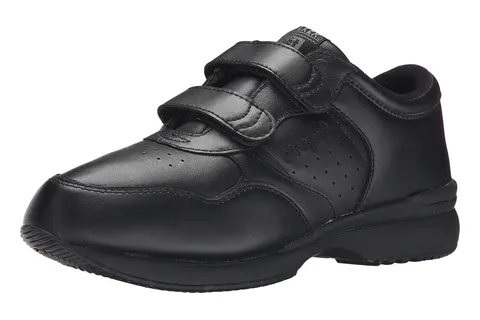
Propét's LifeWalker is built like a medical walking shoe: a contoured heel stabilizer, an EVA midsole with arch support, a removable cushioned orthotic, and a rocker profile that eases each step. Dual hook-and-loop straps make it easy to adjust, and it's listed with Medicare code A5500.
Why it suits flat feet
- Built-in heel stabilizer and arch support
- Removable cushioned orthotic
- Rocker sole eases each step
- Dual hook-and-loop straps; Medicare A5500 code
Drawbacks
- Plain, orthopedic look
- Heavier than a modern sneaker
- Rocker sole takes a few days to get used to
Who should buy it
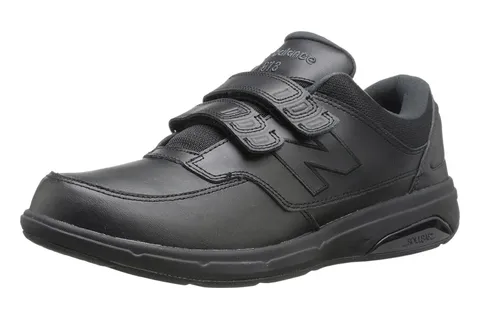
Men who want maximum stability and easy straps.
Who should skip it
Anyone who wants a sporty, lightweight sneaker.
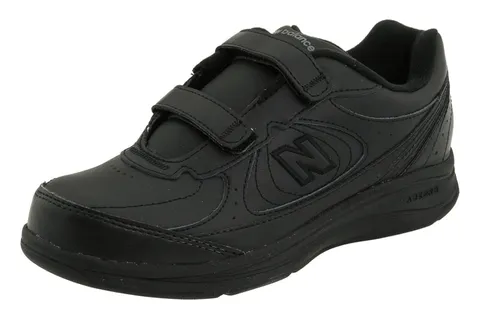
The women's counterpart to the classic New Balance walker: a leather upper with a hook-and-loop closure, Abzorb heel cushioning, and a polyurethane midsole for stable cushioning. Reflective accents help in low light, and it's listed with Medicare code A5500.
Why it suits flat feet
- Hook-and-loop closure
- Abzorb heel cushioning
- Stable polyurethane midsole
- Reflective accents; Medicare A5500 code
Drawbacks
- Moderate arch support
- Basic, classic styling
- Firmer feel than modern foams
Who should buy it
Women who want a stable, easy walking shoe for daily use.
Who should skip it
Anyone who wants a soft, modern sneaker.
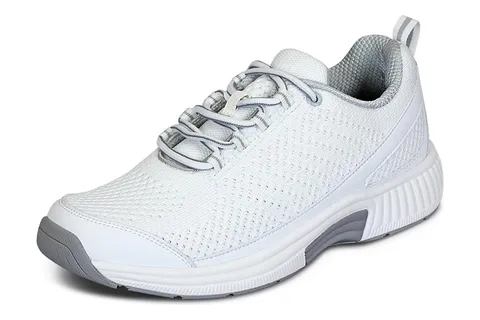
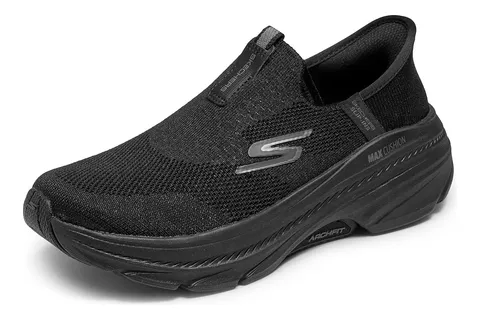
For anyone who finds bending down hard, Skechers' Slip-ins go on with no hands: a heel pillow holds the heel in place. This model pairs that with the Arch Fit insole system and Max Cushioning, plus a Goodyear anti-slip outsole for grip.
Why it suits flat feet
- Hands-free entry, no bending
- Arch Fit insole system
- Max Cushioning
- Goodyear anti-slip rubber outsole; machine washable
Drawbacks
- Less stable than a strapped walking shoe
- Knit upper, not for rain
- Tall, soft cushioning takes adjustment
Who should buy it
Older adults with limited mobility or back pain who need easy entry.
Who should skip it
Anyone with significant balance problems; choose a strapped shoe.
What matters most for older adults
- A firm heel counter and stable base. Stability helps balance, and balance helps prevent falls.
- Arch support. Built in, or via a removable insole you can replace with an orthotic.
- Easy closures. Hook-and-loop straps or hands-free entry, if laces are difficult.
- A slip-resistant outsole. Rubber with good grip, not smooth or worn soles.
- Room for swelling. A wide toe box and adjustable straps for feet that change size through the day.
About Medicare code A5500
Some shoes are listed with HCPCS code A5500, a code for diabetic shoes. People with diabetes who meet Medicare's conditions may be eligible for coverage of therapeutic shoes, usually through a prescribing doctor and a qualified supplier. Buying from Amazon doesn't by itself mean you'll be reimbursed, so ask your doctor or supplier how it works for you. See our diabetic shoes guide for more.
Talk to a doctor if…
one foot is flattening more than the other, the inside of the ankle is swollen or painful, or walking is getting harder. Adult-acquired flat foot can have causes that need medical treatment, not just better shoes.
Frequently asked questions
Why do feet get flatter with age?
The tendons and ligaments that support the arch, especially the posterior tibial tendon, can stretch or weaken over time, and weight gain or conditions like arthritis add strain. Sudden or one-sided flattening should be checked by a doctor.
Are slip-on shoes safe for seniors?
Hands-free slip-ins with a heel pillow that holds the heel securely, like Skechers Slip-ins, can be a good option. Loose slip-ons or backless slippers are a fall risk and best avoided.
Does Medicare pay for shoes for flat feet?
Medicare's therapeutic shoe benefit is generally for people with diabetes who meet specific conditions, not for flat feet alone. Ask your doctor whether you qualify.