Updated October 2026
Best Tennis and Pickleball Shoes for Flat Feet
Running shoes are built to move forward. Court sports are all side-to-side cuts, sudden stops, and lunges, which is exactly when a flat foot rolls hardest. You need a shoe built for lateral stability, and these five are.
This page contains Amazon affiliate links. If you buy through them, I may earn a commission at no extra cost to you. See the
affiliate disclosure.
Quick picks
Two ASICS court staples, a pickleball-specific stability shoe, an APMA-recognized Skechers, and a durable budget tennis shoe.
How these picks were chosen
These are research-based picks, not a claim that I've worn every pair on this page. I compared manufacturer specifications against the features that matter most for flat feet — heel-counter firmness, midsole stability, a removable insole for orthotics, and wide-size availability — and read through patterns in verified buyer feedback. See
how I evaluate shoes and the
medical disclaimer.
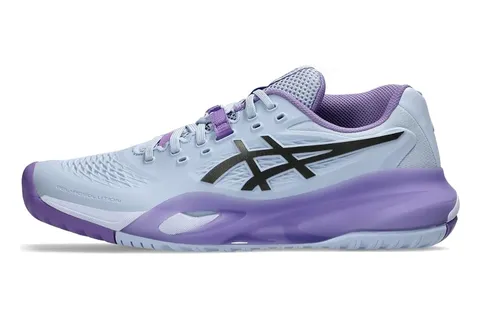
The Gel-Resolution is one of the most stable shoes in tennis. DYNAWALL technology reinforces the midfoot, DYNALACING locks the foot down during fast changes of direction, and the heel's FF BLAST PLUS foam is designed for stable landings. Very durable AHARPLUS rubber in the heel suits heavy draggers.
Why it suits flat feet
- DYNAWALL midfoot support for lateral stability
- DYNALACING locks the foot in during cuts
- Stable heel landings
- Very durable outsole
Drawbacks
- Firm and stiff in the first few hits
- Premium price
- The listing covers several colors and sizes, so check you've picked the right model
Who should buy it
Regular tennis players with flat feet who need maximum lateral stability.
Who should skip it
Casual players who want a soft, lightweight feel.
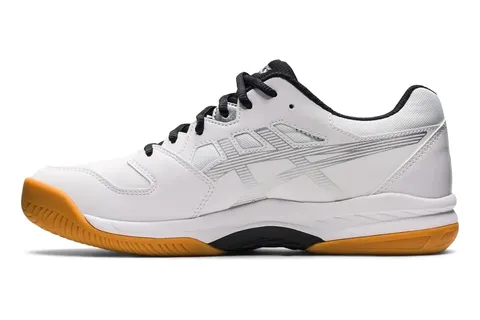
A pickleball and indoor court shoe with TRUSSTIC technology, a midfoot shank that resists twisting, plus a wrap-up outsole and wider base for balanced lateral moves. Forefoot GEL softens the quick, low movements pickleball demands.
Why it suits flat feet
- TRUSSTIC midfoot shank improves stability
- Wrap-up outsole and wider base for lateral moves
- Forefoot GEL cushioning
- Good for indoor courts
Drawbacks
- The listing notes it runs narrow
- Indoor-oriented outsole wears faster outdoors
- Moderate arch support; add an insole if needed
Who should buy it
Indoor pickleball and badminton players with narrow-to-medium flat feet.
Who should skip it
Wide feet; choose the Skechers or New Balance instead.
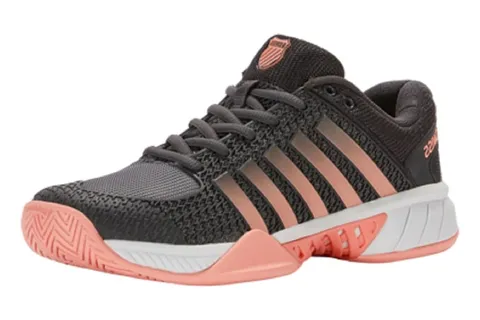
K-Swiss says it designed the Express Light "as a stability shoe for the short lateral and front/back movement" of pickleball. It has an OrthoLite liner and reinforced toe and heel to resist dragging, and K-Swiss notes the stable fit may take some adjustment if you're coming from a neutral sneaker.
Why it suits flat feet
- Designed specifically as a pickleball stability shoe
- OrthoLite sock liner
- Reinforced toe and heel resist dragging
- Light build for quick footwork
Drawbacks
- Takes time to adjust coming from neutral sneakers
- Moderate arch support built in
- Stability fit feels firm at first
Who should buy it
Women pickleball players who want stability without a heavy shoe.
Who should skip it
Players who want a soft, plush feel.
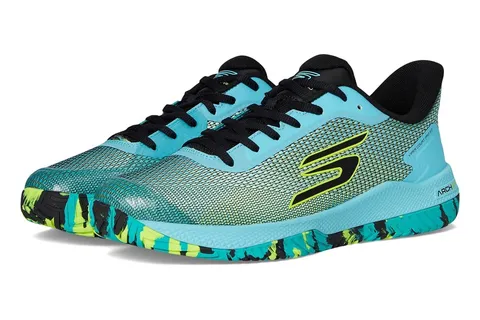
The Viper Court Pro 2.0 ships with Skechers' removable Arch Fit insole, and the listing says the design carries the APMA Seal of Acceptance, which is rare for a court shoe. A Goodyear rubber outsole supports controlled slides, and it's also suitable for padel and tennis.
Why it suits flat feet
- Removable Arch Fit insole with arch support
- APMA Seal of Acceptance
- Durable Goodyear rubber outsole
- Works for pickleball, padel, and tennis
Drawbacks
- Lighter build gives a little less lockdown than ASICS
- Arch Fit contour isn't for everyone
- Newer model with fewer reviews
Who should buy it
Pickleball players who want arch support built in without buying an insole.
Who should skip it
Anyone who already uses custom orthotics, which would replace the main benefit.
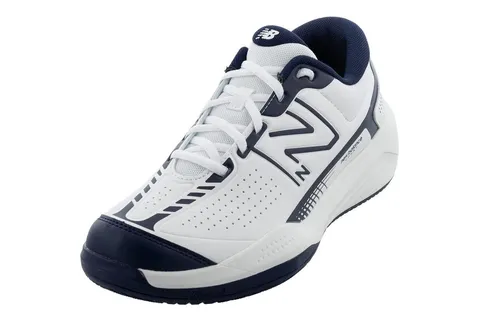
A durable, affordable hard-court tennis shoe with a locked-down upper and a full-length Ndurance outsole with a herringbone pattern. It's not the most supportive shoe here, but it's a stable court shoe at an approachable price, and it pairs well with an insole.
Why it suits flat feet
- Locked-down fit for lateral movement
- Durable Ndurance outsole
- Herringbone pattern for hard-court grip
- Usually affordable
Drawbacks
- Less midfoot technology than the ASICS picks
- Basic stock insole
- Hard-court specific
Who should buy it
Recreational players who want a stable court shoe and will add an insole.
Who should skip it
Anyone needing maximum built-in support.
Why you shouldn't play in running shoes
Running shoes have tall, soft heels and flared bases designed for straight-line motion. On a court, that softness lets the foot roll over the edge of the midsole during a side step, and with flat feet that roll starts from an already-collapsed position. Court shoes are lower, firmer, and reinforced along the sides so the foot stays on top of the platform when you change direction.
The outsole matters too: court shoes use flatter, more durable rubber with patterns like herringbone that grip a hard court without catching, while running-shoe lugs can grab and twist an ankle.
What to look for with flat feet
- Midfoot stability features (DYNAWALL, TRUSSTIC, shanks) that resist twisting.
- Lateral reinforcement on the upper to keep the foot on the platform.
- A removable insole so you can add an arch-support insole.
- The right outsole for your surface: hard-court, clay, or indoor.
Frequently asked questions
Can I use tennis shoes for pickleball?
Yes. Tennis shoes are generally a good choice for pickleball because both sports need lateral support and court-specific outsoles. Pickleball-specific shoes tend to be a bit lighter and lower to the ground.
Are court shoes good for flat feet?
Court shoes with midfoot stability features and lateral reinforcement are a much better choice than running shoes for court sports with flat feet. Adding a supportive insole to a stable court shoe is a common, effective combination.
How often should I replace pickleball or tennis shoes?
Frequent players often wear through outsoles or compress midsoles within a few months. Replace them when the tread is worn smooth in the forefoot or the shoe no longer feels stable during lateral moves.